
How to Run a Magnesium Pilot Without Betting a Program on It

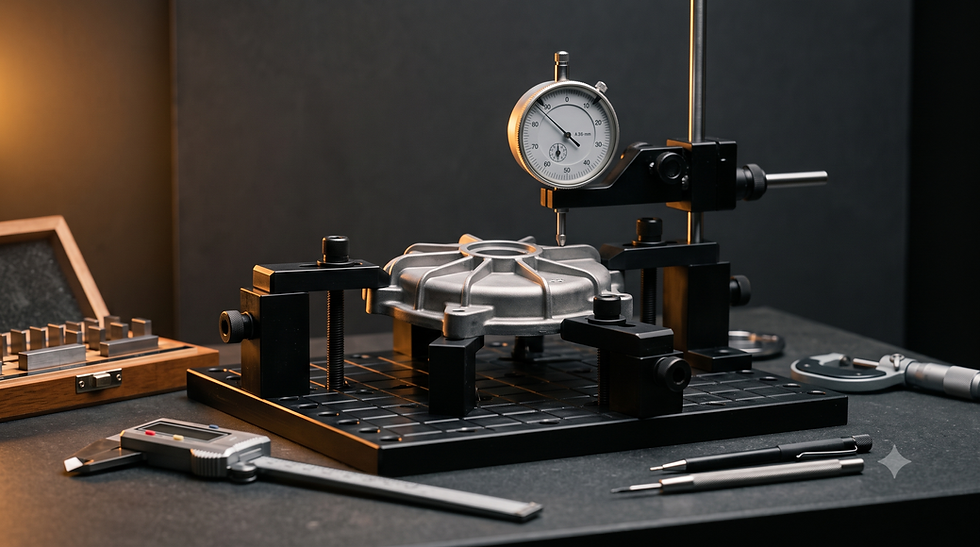
Here is how magnesium programs usually fail, and it has nothing to do with the material: someone picks the boldest possible first part. A structural node. A safety-relevant bracket. A high-volume housing on the flagship platform. The engineering is often sound — and it doesn't matter, because the risk assessment kills the proposal before the physics gets a hearing. Nobody signs off on learning a new material and betting a program in the same motion.
The programs that succeed invert the logic. They shrink the bet until the risk assessment has nothing to object to, and let the evidence do the scaling.
Choosing the part: boring on purpose
The ideal pilot part is one your program can afford to be wrong about. In practice that means:
Low consequence — A cover, bracket, or housing whose failure inconveniences nobody — non-structural, non-safety, replaceable in service.
Real content — Enough geometry to exercise what you're actually validating: thin walls, ribs, at least one boss with a fastener, a coated surface. A flat plate proves nothing.
Honest tooling — Volumes low enough that a die iteration is a line item, not a crisis — but real production tooling, because prototype processes validate nothing about production.
Define what “worked” means before the first shot
A pilot without pre-agreed success criteria becomes a Rorschach test — every stakeholder reads their prior belief into it. Fix the criteria in writing before tooling cuts: target mass versus the incumbent part, dimensional capability on the features that matter, salt-spray hours the coated part must survive, and the documentation set (PPAP, FAI, CoC) delivered as if this were a production program. That last item is deliberate: you are piloting the supplier's quality system as much as the material.
Where pilots actually go wrong
Three failure modes account for most of the disappointments, and all three are preventable at scoping:
Geometry copied, not converted — The part gets converted find-and-replace from aluminium instead of redesigned to magnesium's rules — and delivers half the expected saving. Budget a real DFMA pass.
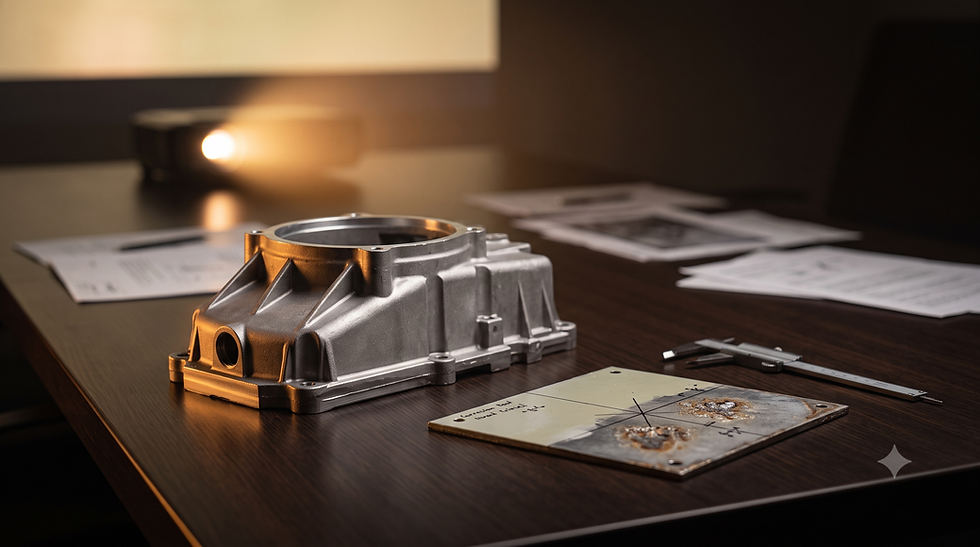
The joint, again — The fastener detail is deferred — “we'll sort inserts later” — and the field units come back with galvanic corrosion that gets blamed on the material.
No service time — Nobody plans field exposure, so a year later the only evidence is lab data, and the board asks the one question the pilot can't answer.

What the pilot buys you
Run this way, the pilot's output isn't really the part. It's a defensible internal data point — your geometry, your quality gate, your field exposure — that converts the second program from an act of faith into an ordinary approval. That's the entire return: the first program buys down the risk premium on every one that follows.
Have a candidate part? Send it across and we'll scope the pilot honestly — timeline, tooling, validation plan, and where it can go wrong. https://www.exclusivemagnesium.com/rfq


Comments