
From Prototype to Production: Magnesium Manufacturing That’s Built for Performance
We help design and R&D teams reduce weight, consolidate assemblies, and cut cost with magnesium—across casting, machining, extrusion, and forging.

30–50% weight reduction potential vs steel/aluminum (application dependent)
End-to-end capability: DFM → tooling → production → testing
Aerospace & defence-grade quality systems (certifications & traceability)
Share a STEP/IGES + target quantity. We’ll respond within 1–2 business days.
Which Capability Do You Need?

Magnesium Sand Castings
Best for: Large parts, complex geometry, low-to-mid volumes
✅
Why Teams Choose it?
-
Cost-effective tooling for early production
-
Great for larger envelopes and thick sections
-
Faster iteration cycles for design changes
✅
Typical parts
Instrument housings, brackets, enclosures, prototypes from cast blocks
✅
Alloys being Sand Casted by Us:
-
AZ91
-
AZ80
-
ZE41
-
Any Custom Composition Alloy

Magnesium Gravity Die Castings
Best for: Medium volumes + better finish and consistency than sand
✅
Why Teams Choose it?
-
Better dimensional stability and surface finish
-
Stronger repeatability for production runs
-
Good balance of tooling cost vs output quality
✅
Typical parts
Covers, housings, brackets, structural parts for drones/robotics
✅
Alloys being Sand Casted by Us:
-
AZ91
-
AZ80
-
ZE41
-
Any Custom Composition Alloy
Magnesium High Pressure Die Castings
Best for: Large parts, complex geometry, low-to-mid volumes
✅
✅

Why Teams Choose it?
-
Cost-effective tooling for early production
-
Great for larger envelopes and thick sections
-
Faster iteration cycles for design changes
Typical parts
Instrument housings, brackets, enclosures, prototypes from cast blocks
✅
Alloys being Sand Casted by Us:
-
AZ91
-
AZ80
-
ZE41
-
Any Custom Composition Alloy
Magnesium CNC Machined Parts
Best for: Prototypes, tight tolerances, small batches
✅
Why Teams Choose it?
-
Fast lead times for prototypes
-
Excellent tolerances and surface control
-
Works from billet, forged blocks, rolled plates, and cast blocks
✅
Typical parts
Prototype brackets, test fixtures, precision housings
✅
Alloys being CNC Machined by Us:
-
AZ91
-
AZ80
-
AZ31
-
ZM21
-
Elektron-21 (E21)
-
WE43
-
Any Custom Composition Alloy

Magnesium Extrusions
Best for: Structural profiles, long parts, lightweight frames, Wrought Material, Aerospace/Defence Parts
✅
✅
✅

Why Teams Choose it?
-
High strength-to-weight in profile form
-
Efficient for long geometries
-
Great for structural rails, frames, heat management designs
Typical parts
Aerospace/defence profiles, lightweight frames, structural members
Alloys Options in Extrusions:
-
AZ91
-
AZ80
-
AZ31
-
AZ61
-
WE43
-
Pure Mg
-
Any Custom Composition Alloy
Magnesium Forgings
Best for: Critical load parts needing superior mechanical properties
✅
✅
✅
Why Teams Choose it?
-
Higher mechanical performance vs cast
-
Better fatigue performance for certain use cases
-
Strong option for high reliability parts
Typical parts
High-load brackets, structural connectors, aerospace-like applications
Alloys Options in Forgings:
-
AZ91
-
AZ80
-
AZ31
-
ZK60
-
WE43
-
Any Custom Composition Alloy

We have Served Some of Best and Biggest Names Globally


Trusted and Certified


Real Engineers. Real Results. Real Impact.
Reduced Component Weight by ~50%, and while making it Cheaper and Quicker to manufacture.
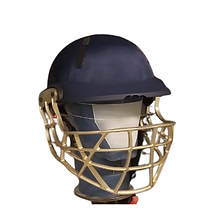

Reduced Weight by 33%, while increasing Range of the End Product.
“Switching from Aluminium to Magnesium. Saved 33% weight instantly.”
Redesigned the Assembly to Under 90 gms and making it suitable for High Pressure Die Casting Production.

What We Need From You?
-
3D file: STEP / IGES (preferred)
-
2D drawing (PDF) if available
-
Target quantity (prototype + annual volume)
-
Environment: indoor/outdoor, corrosion needs
-
Any critical tolerances & surface finish requirements
-
Deadline / program timeline
If you’re not sure, send what you have.
We’ll help define the next steps.
Feasibility Review / Request Call Back
-
We typically respond within 1–2 business days.
-
NDA available on request.
Frequently Asked Questions (FAQs)
1. What volumes do you support for each process? A. - Sand Castings are used for low volume prototypes ranging from 1 unit to a maximum of 100 units. - Gravity Die Casting are used for Batch Production ranging from 100 units to 500 Units. - High Pressure Sand Castings are used for Serial Production or higher volume Production Ranging from 250 units to 100,000 Units Per Year. - CNC Machining are used for Prototypes and Production of batch volume parts ranging from 1 unit to 250 Units. - Extrusions are done for Production Purposes only and the MoQ is based on Kgs ranging from 100 Kgs to 2 Tonnes to start. - Forgings are used for Prototypes and Batch Production ranging from 1 unit to 250 Units.
2. Can you help with DFM and redesign for casting? A. Yes, we help with DFM and redesign of the casting when needed. Depending on the scale of the Project and Purview of work, we may do it for free or at a nominal cost.
3. What alloys do you typically work with? A. We work with all Mainstream Magnesium Alloys - AZ91D, AM50A, AM60B, AZ80A, AZ31B, WE43, ZE41, etc. However, we can also create custom alloys and open to manufacture castings from any composition of Magnesium Alloy.
4. How do you handle corrosion protection? A. New Age Magnesium Alloys are already good with Corrosion Resistance, however, we always recommend the customer to do a coating on the Components if the use-case permit. We support the following coating - Chromate Coating, Powder Coating, Painting, CED, MAO, Anodizing, Surtec 650, etc.
5. What’s the typical lead time for prototype vs production? A. Prototypes can be done quickly, in as low as 2-6 Weeks. The timeline can vary or increase based on complexity and geometry. Production can be done using Tooling and the Tooling would take anywhere between 8-24 Weeks depending on the Process we select.
6. Can you do machining + post-processing in-house? A. Yes, we do CNC VMC Machining and Chromate Coating in-house. For all other forms of Machining and Coatings, we outsourced to our network of Magnesium Qualified and Trained Supplier.
7. Do you support testing / inspection reports? A. Yes, we do support all testing and Inspection Requirements. You can check out our Test Facilities Page to find out more about our Testing and Inspection capabilities.
8. Can we start with a pilot run before scaling? A. Yes, we recommend all our customer who are trying Magnesium Alloy parts for the first time to start with Prototypes, test them thoroughly for Fit, Form and Function before scaling.